



Head:
Robert Lasarzik
Coworkers:
Giulia Cavalleri, Marcel Śliwiński, Michael Tsopanopoulos
Team Assistant:
Anke Giese
External PhD student:
Maximilian Reiter
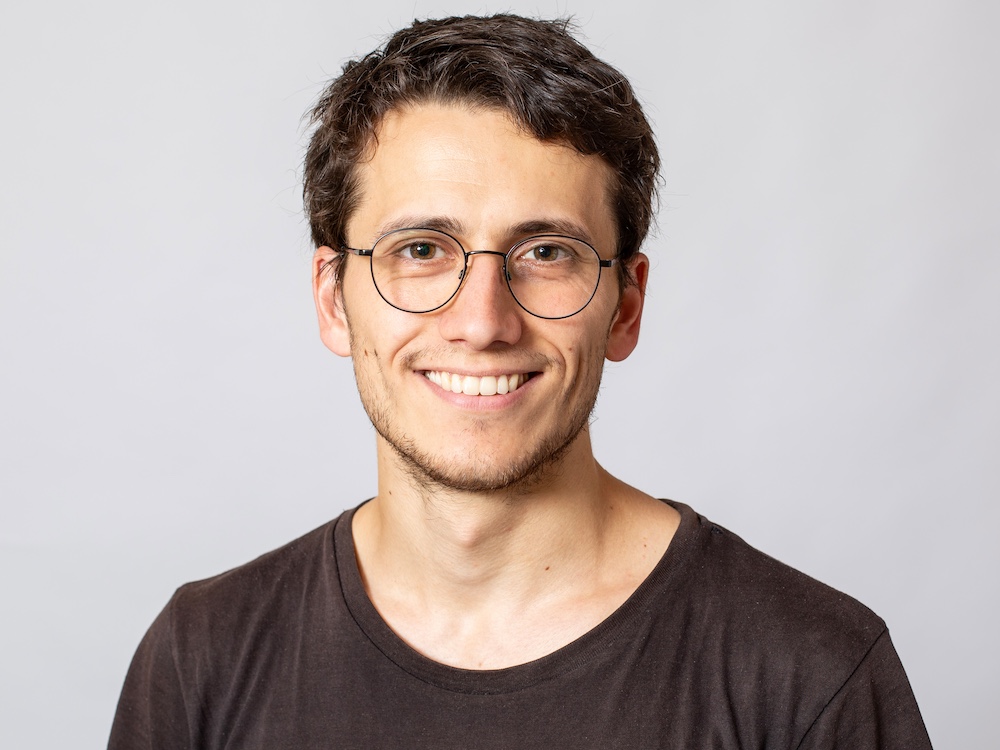
Robert Lasarzik
Coworkers:
Giulia Cavalleri, Marcel Śliwiński, Michael Tsopanopoulos
Team Assistant:
Anke Giese
External PhD student:
Maximilian Reiter
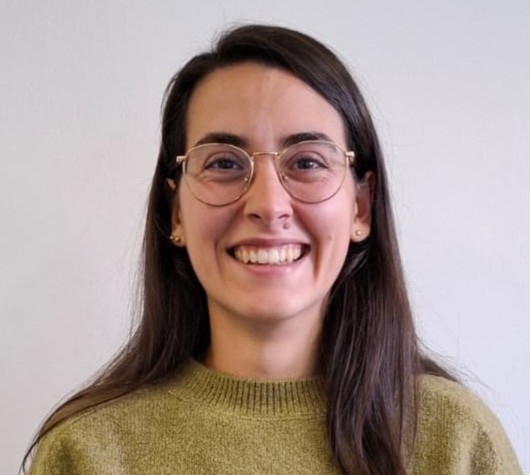
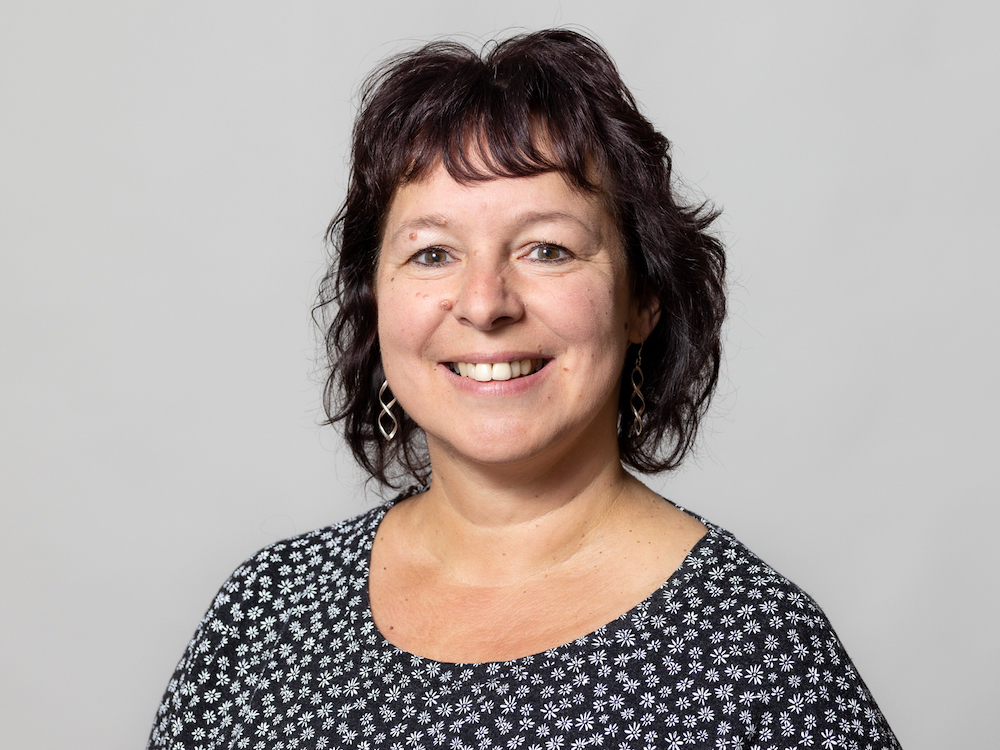
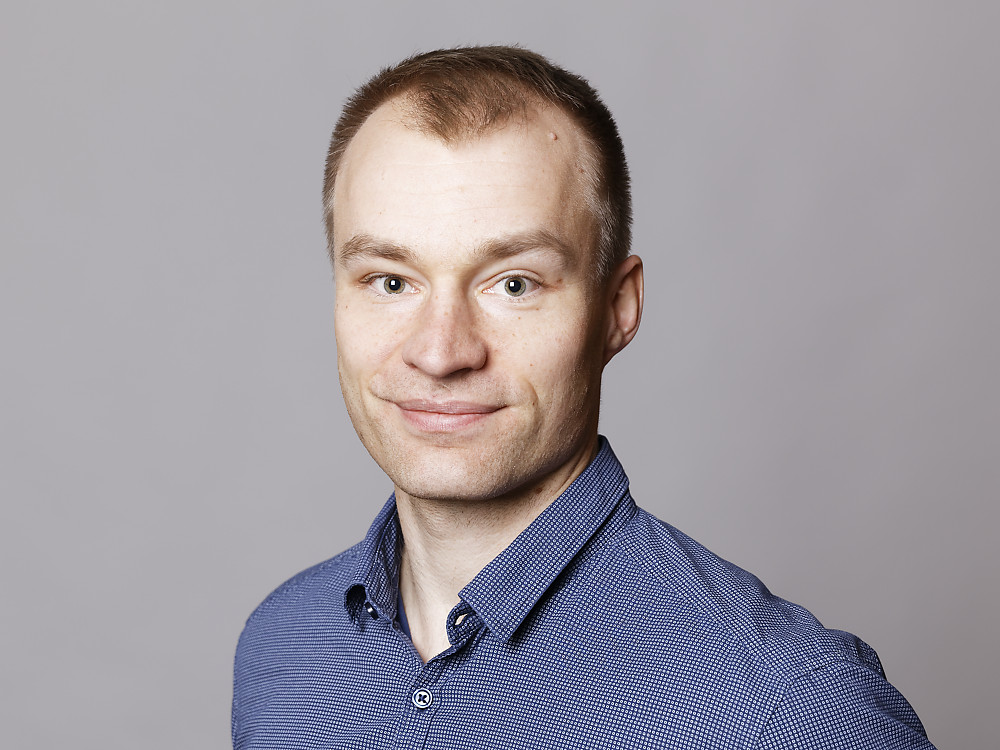
From left to right: Giulia Cavalleri, Anke Giese, Robert Lasarzik, Michael Tsopanopoulos
Many technological advancements have been driven by innovations in material science. Liquid crystals have enabled the development of modern displays, while semiconductors remain essential for the continuous growth of computational power. Today, several emerging breakthroughs have the potential to spark further innovations. Anisotropic fluids and polymers play a key role in Lab-on-a- Chip devices and human-machine interfaces, while additive manufacturing techniques facilitate the cost-effective production of complex workpieces with tailored properties. The development of these novel technologies depends on the design and production of advanced materials, a process traditionally reliant on costly experiments and prototyping. Mathematical modeling and simulations offer a powerful alternative, significantly reducing costs while enabling the discovery of optimal material properties and production parameters through mathematical optimization. As production processes become increasingly well-documented, the role of mathematics continues to expand. However, real-world mathematical models are often highly nonlinear and strongly coupled, posing significant challenges for conventional mathematical methods. A recent breakthrough — the energy-variational framework — provides a novel approach to rigorously analyzing such complex models. This framework provides the means to develop numerical schemes, simplifying models while quantifying resulting errors, and designing effective control strategies. The aim of the Weierstrass Group is threefold, we will- use the energy-variational framework to analyze highly nonlinear coupled partial differential equations;
- consider reduced models and hierarchies, derive quantitative error estimates for these reductions;
- implement numerical simulation and optimization tools leading to optimal process or material parameters and designs.
Highlights
- In February 2026 the new Weierstrass Group "Energy-variational Methods for innovative Materials” was initiated.
- Robert Lasarzik recently received his Habilitation at FU Berlin the thesis can be found here.
- The Preprint "Probabilistically Strong solutions to Stochastic Euler Equations" together with Benjamin Gess can now be found on Arxiv.
- The Preprint "Existence and selection of solutions in the energy-variational framework with applications in fluid dynamics" together with Thomas Eiter and Marcel Sliwinski can be found on Arxiv.
- Giulia Cavalleri started her PostDoc in March within the Excellence Cluster MATH+.
- Robert Lasarzik will organize a Minisymposium at the FBP Conference together with Elisabetta Rocca and Hao Wu on Phase Field Methods in Real-World Applications.
-

On April 28, Marcel Sliwinski and Robert Lasarzik from our Group together with Thomas Eiter from Group 1 defended our project proposal on “Analysis of energy-variaitonal solutions for hyperbolic conservation laws” for the second funding period within the SPP 2410 CoScaRa at the Review Event in Mainz. This went extremely well and the project was recommended for funding by the reviewers.
- A new article by Robert Lasarzik, together with Elisabetta Rocca and Giulio Schimperna, is now available online: Weak solutions and weak-strong uniqueness for a Cahn-Hilliard-type model with chemotaxis.
In this work, we establish the existence of global-in-time weak solutions and weak-strong uniqueness for a Cahn-Hilliard-Keller-Segel model. As a somewhat surprising result, we achieve global existence on general domains, something that remains unknown for the classical Keller-Segel model. - Maximilian Reiter successfully defended his doctoral dissertation on May 12, 2026. The examiners, Lubomir Banas, Etienne Emmrich, and Robert Lasarzik, as well as the chair of the committee, Martin Skutella, were very impressed by both the half-hour presentation and the hour-long discussion.
- Together with Martin Eigel, Christian Merdon, and Claudia Schillings, Robert Lasarzik acquired the MATH+project “Anisotropic Topology Optimization with Adaptive Galerkin Neural Networks". This is a cooperation with the industrial partner Endless Industries, who developed a new printing head for additive manufacturing allowing the continuous integration of carbon fibres in the workpiece. Within this project we will develop novel tools for the optimization of the resulting structures based on finite elements, neural networks, and uncertainty quantification. A new PhD Student will start to work in the Group on this topic soon.

Flexible Research Platform
