



Head (acting):
Matthias Liero
Coworkers:
Thomas Eiter, Janusz Ginster, Annegret Glitzky, Olaf Klein, Thomas Koprucki, Anieza Maltsi, Dirk Peschka, Joachim Rehberg, Stefanie Schindler, Burkhard Schmidt
Team Assistant:
Andrea Eismann
Nonresident Members:
Alexander Mielke, Jürgen Sprekels
Fellowships:
Kateryna Buryachenko
Former Honorary Members:
Herbert Gajewski, Konrad Gröger
Upcoming Events:
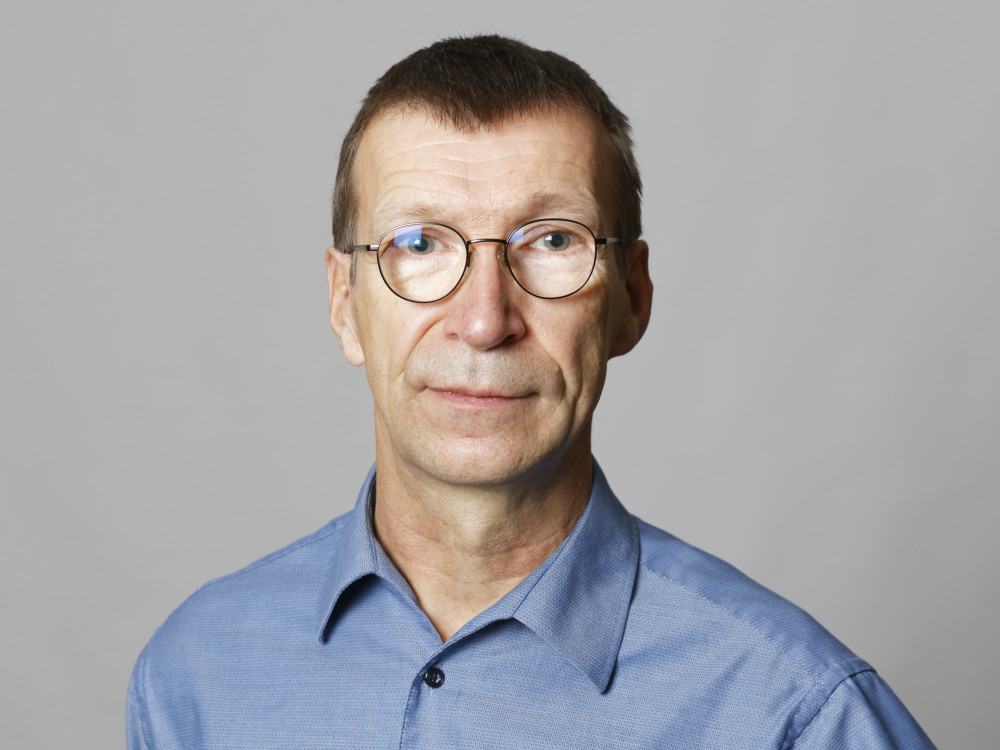
Matthias Liero
Coworkers:
Thomas Eiter, Janusz Ginster, Annegret Glitzky, Olaf Klein, Thomas Koprucki, Anieza Maltsi, Dirk Peschka, Joachim Rehberg, Stefanie Schindler, Burkhard Schmidt
Team Assistant:
Andrea Eismann
Nonresident Members:
Alexander Mielke, Jürgen Sprekels
Fellowships:
Kateryna Buryachenko
Herbert Gajewski, Konrad Gröger
Upcoming Events:
- 17th International Conference on Free Boundary Problems: Theory and Applications 2026 (FBP 2026), September 7 -- 11, 2026
- CRC/TRR 388 Day on Optimal Transport, December 14, 2026
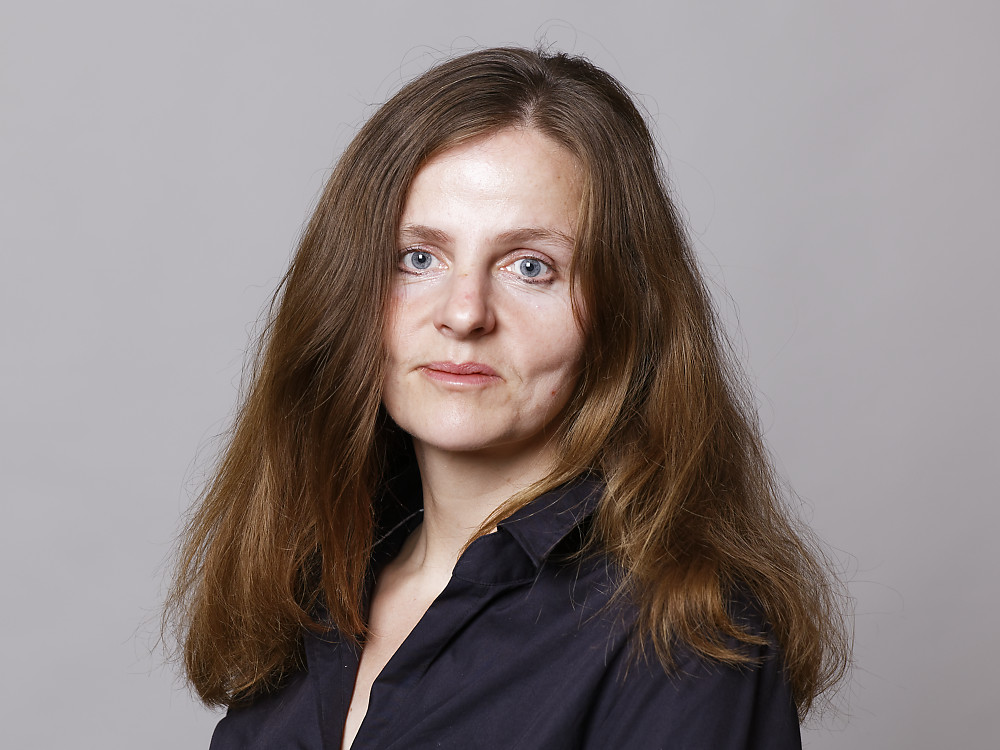
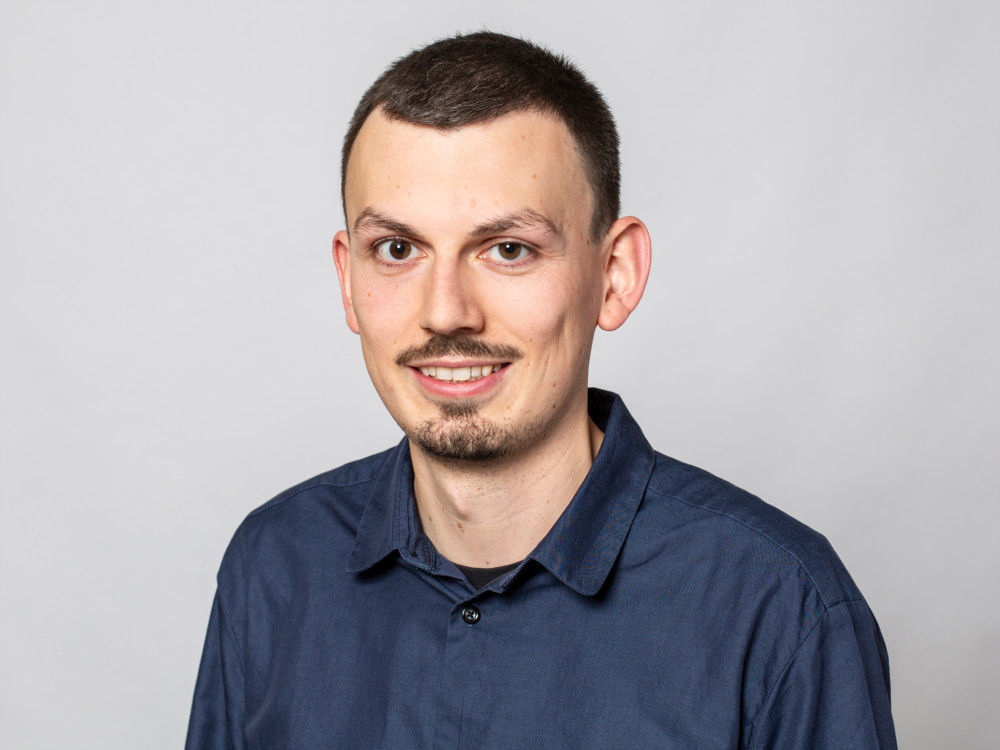
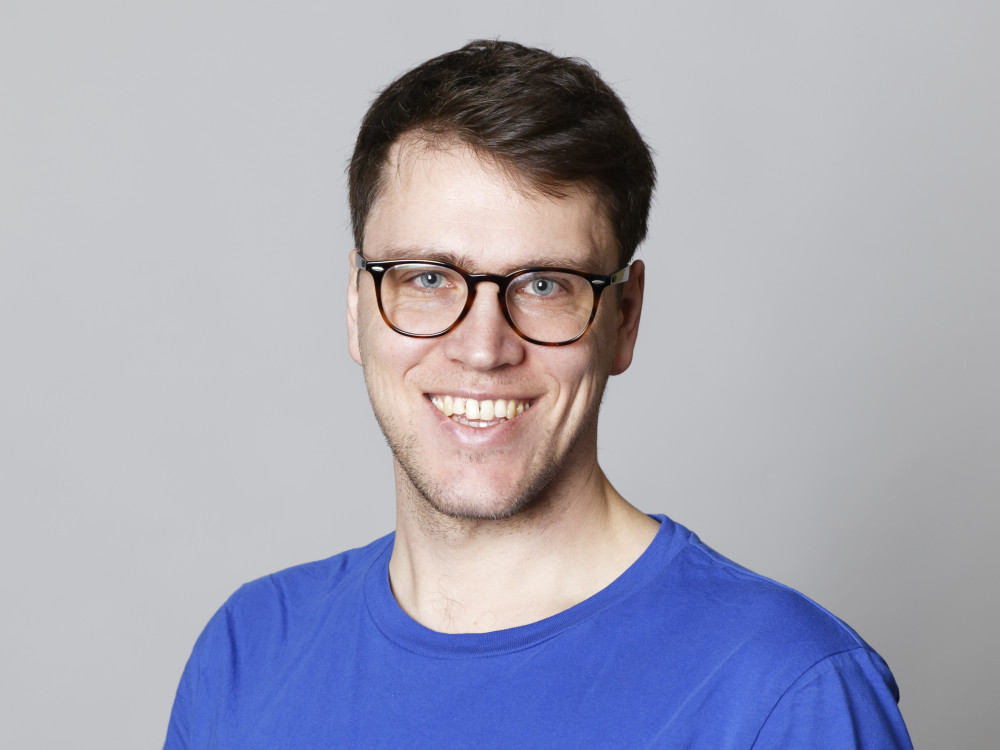
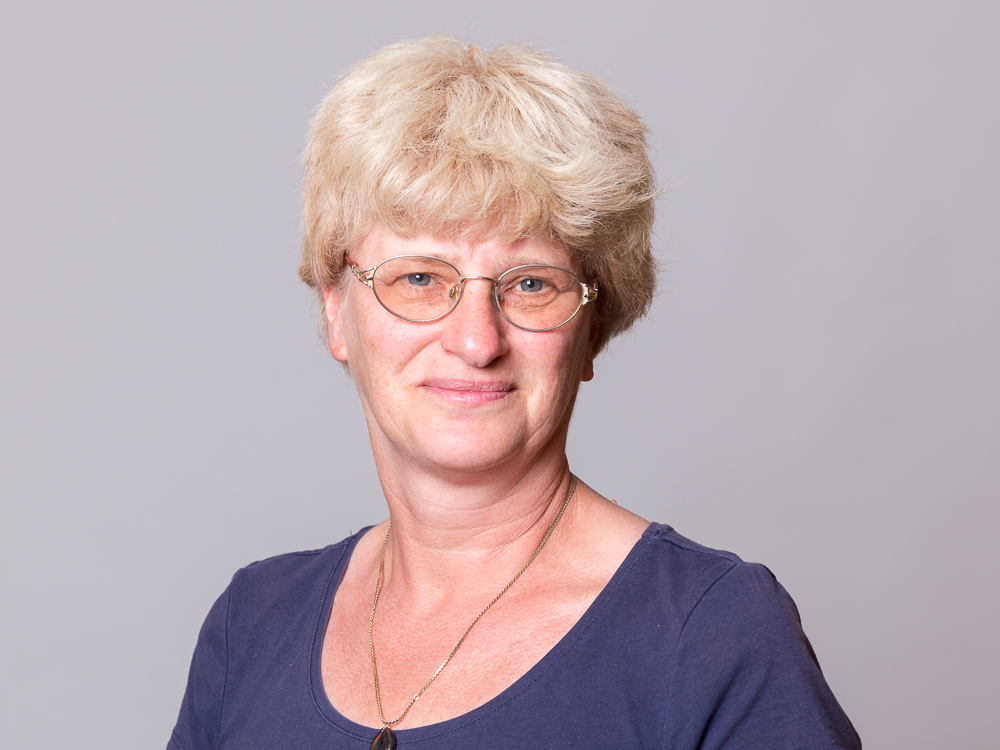
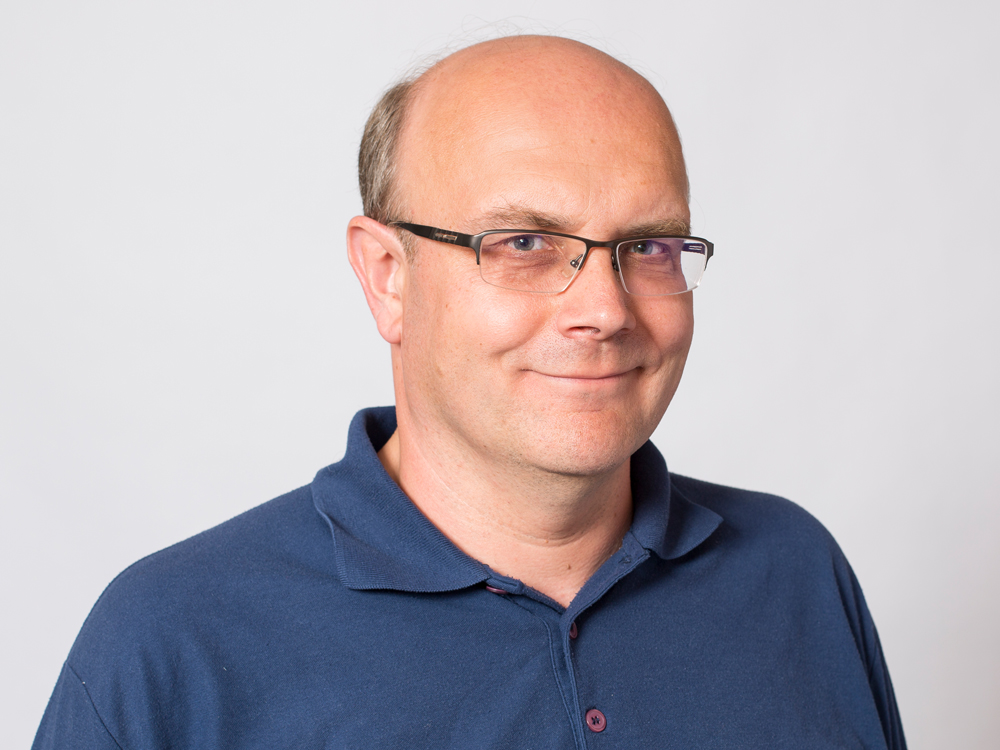
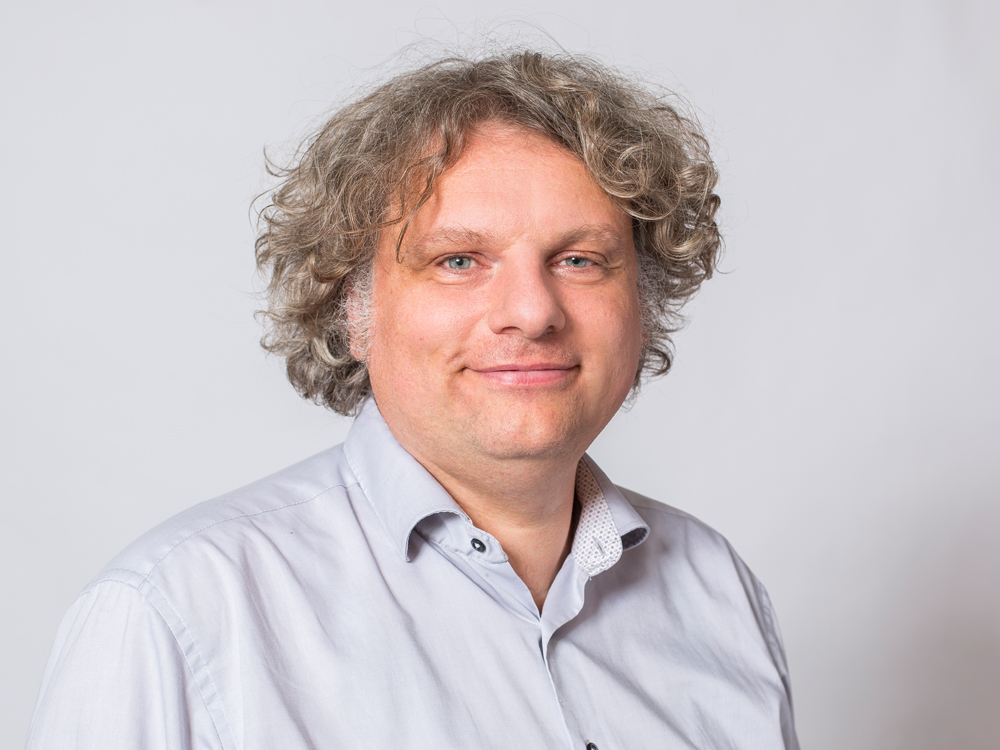
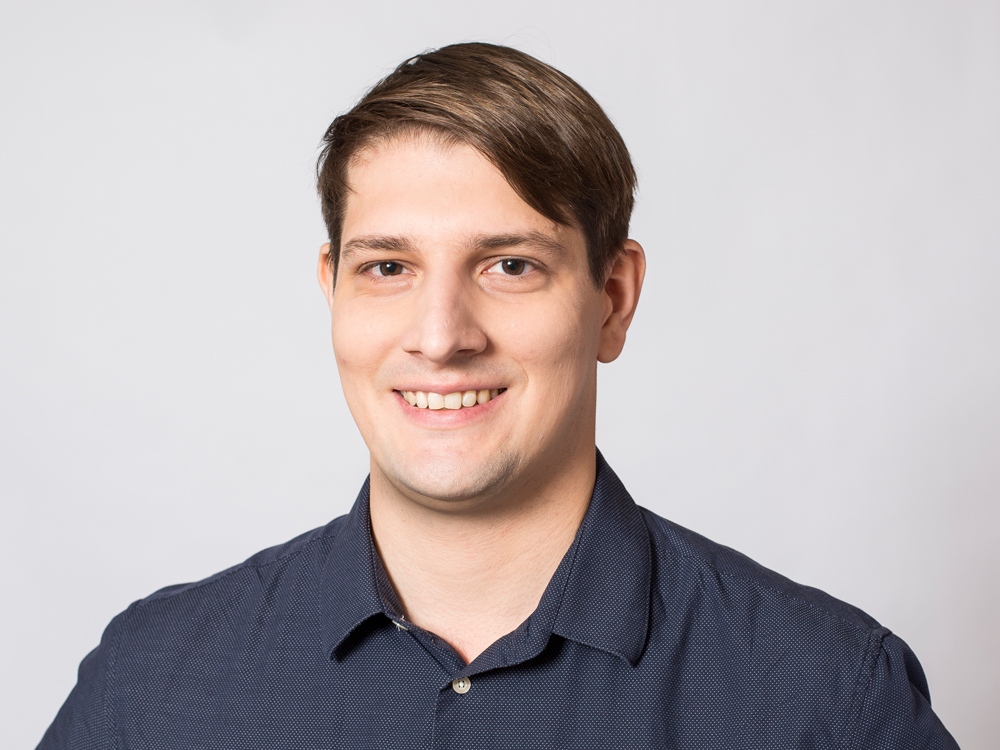
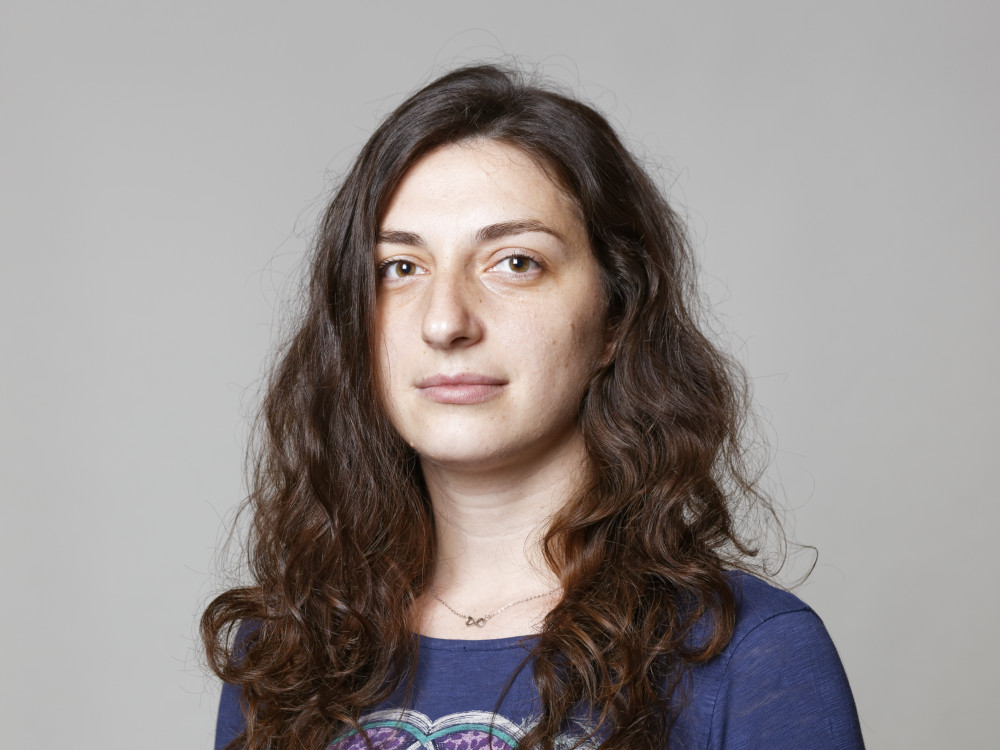
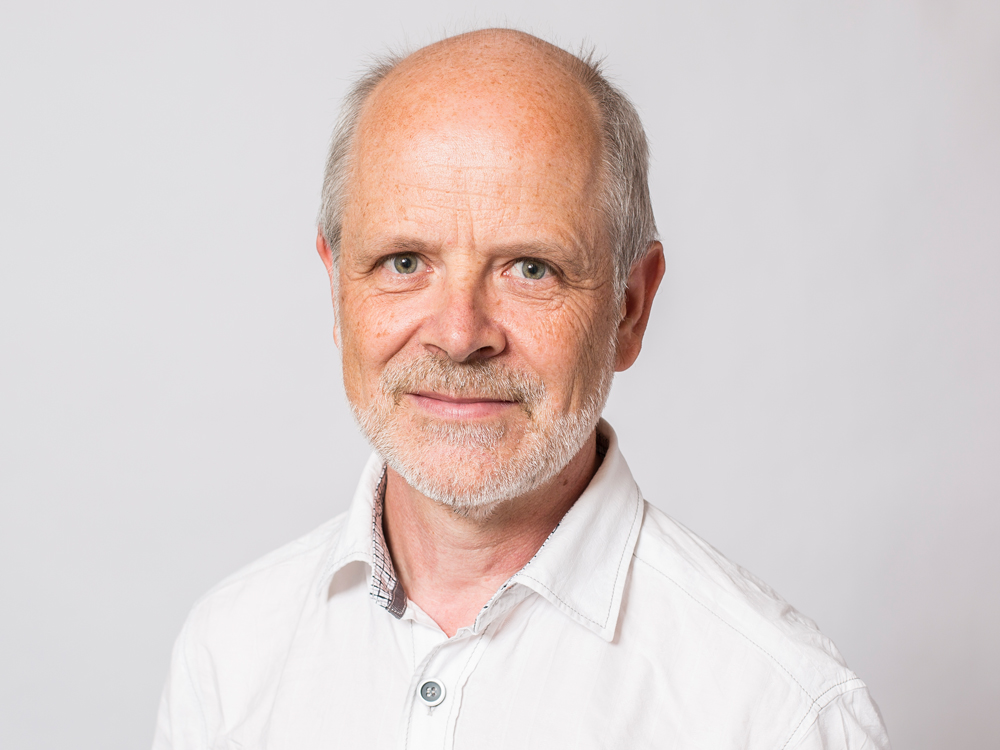
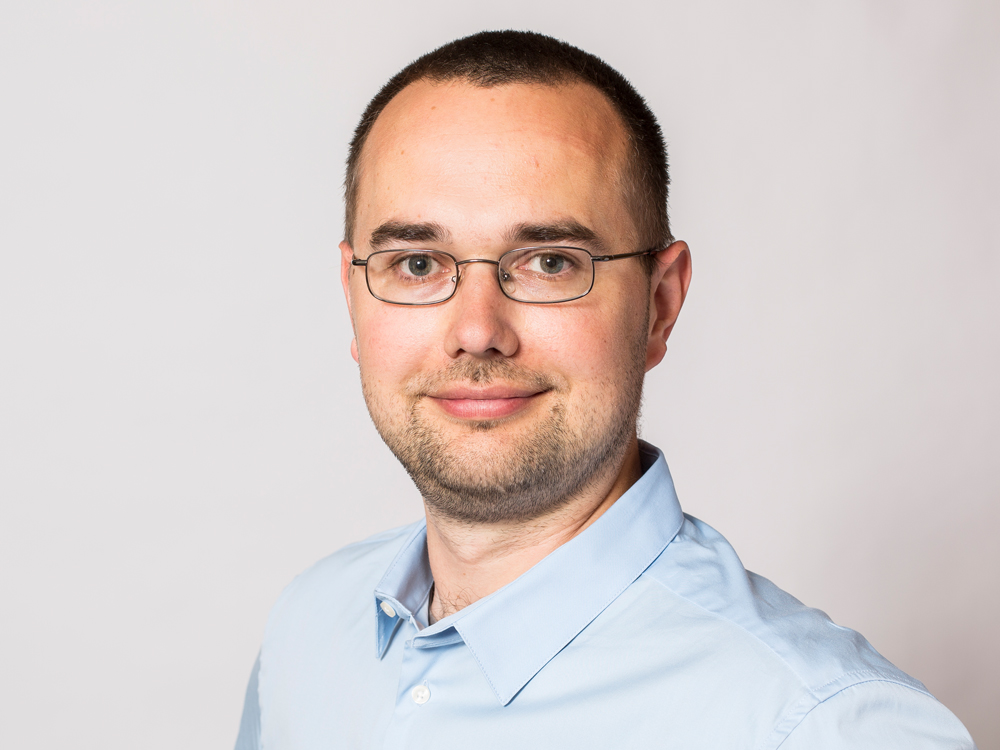
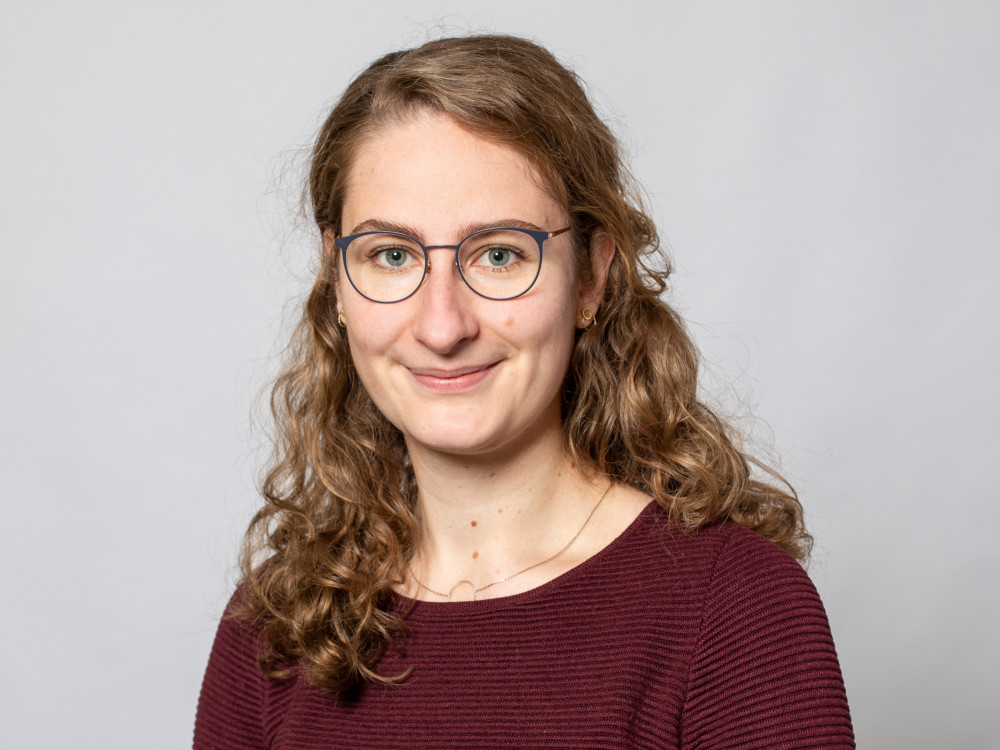
From top left to bottom right: Andrea Eismann, Thomas Eiter, Janusz Ginster, Annegret Glitzky, Olaf Klein, Thomas Koprucki, Matthias Liero, Anieza Maltsi, Alexander Mielke, Dirk Peschka, Stefanie Schindler, Burkhard Schmidt.
Overview
Many fundamental processes in nature and technology can be described by partial differential equations. The research group is working on the analytical theory of such equations (existence, uniqueness, qualitative behaviour) and on the development and implementation of algorithms for their numerical solution. The algorithms are used for the numerical simulation in industrial applications. The functionality of modern materials, for instance, relies on the complex interplay of effects on several length and time scales as well as on different physical effects, such as mechanics, thermodynamics, optics, and electromagnetism. The main topics of research are mathematical models of carrier transport in semiconductors and optoelectronic devices and reaction-diffusion equations for the transport of dopants in solids. Furthermore, nonlinear material models for linearized and nonlinear elasticity and plasticity as well as for systems with internal variables are under study. In this context, we develop in particular methods for abstract evolutionary equations, e.g. gradient systems, and for multiscale problems.
Highlights
The workshop ”Optimal Transport and Noise: OT Meets (S)PDEs”, held from March 16 to 18, 2026, brought together around 60 participants from across Europe and the United States at the Weierstrass Institute (WIAS). The talks and discussions covered a broad range of topics, including adapted optimal transport, rough transport cost inequalities, well-posedness and numerical methods for SPDEs, as well as questions on regularisation and synchronisation by noise. The program also featured perspectives on applied optimal transport in biology.
On February 12 and 13, more than 20 participants attended the workshop ”Widening the Scope of Rough and Stochastic Analysis -- Rough Women Reach Out!”, which brought a group of outstanding female speakers to Berlin. The scientific program featured inspiring talks covering a broad range of topics, including algebraic quantum field theory, random matrices, interacting particle systems, and recent theoretical advances in diffusion-based generative modelling. The workshop created a lively and supportive atmosphere, encouraging exchange across different areas of stochastic analysis and related fields. In addition to the research talks, the program included a panel discussion with the invited speakers. During this session, they shared personal experiences from their academic careers, reflected on obstacles they had encountered along the way, and discussed strategies for navigating challenges in research environments.
From September 29 to October 1, 2025, Thomas Eiter (FU Berlin, WIAS), Robert Lasarzik (WIAS), and László Székelyhidi (MPI Leipzig, U Leipzig) hosted the workshop "Mathematical Analysis of Fluid Flows by Variational Methods" (MAFF 2025) at the Weierstrass Institute. The event was a success, thanks to the outstanding invited talks by Roberta Bianchini, Elisabetta Chiodaroli, Eduard Feireisl, Björn Gebhard, Mária Lukácová-Medvidová, Boris Muha, Alexis Vasseur, Emil Wiedemann, Aneta Wróblewska-Kamińska, and Ewelina Zatorska, and 19 further contributed presentations. About 60 participants attended the talks on analytic problems from fluid mechanics, mainly related to questions of existence, uniqueness and construction of solutions, generalized solution concepts, selection criteria, relative entropy methods, and asymptotic behavior. The organizers are grateful for the financial support provided by MATH+, CRC 1114, and PP 2410.
We are pleased to announce that Stefanie Schindler sucessfully defended her PhD thesis entitled “Asymptotic self-similar behavior in coupled systems" on July 8, 2025.
The MATH+ project proposal "Emergent structures in multi-component systems for embryogenesis" by the principal investigators Katharina Hopf, Matthias Liero (both WIAS), and Markus Mittnenzweig (Max Delbrück Center) has been approved in June 2025.
Anastasija Pešić sucessfully defended her PhD thesis entitled “Mathematical analysis of a variational model related to pattern formation in biomembranes" on February 13, 2025. Congratulations!

Research Groups
- Partial Differential Equations
- Laser Dynamics
- Numerical Mathematics and Scientific Computing
- Nonlinear Optimization and Inverse Problems
- Interacting Random Systems
- Stochastic Algorithms and Nonparametric Statistics
- Data-Driven Mathematical Modeling
- Nonsmooth Variational Problems and Operator Equations
