Research Group
"Stochastic Algorithms and Nonparametric Statistics"
 F10: Image and signal processing in the biomedical sciences

Overview
- Software
- Publications
- Cooperation
Matheon - F10: Image and signal processing in the biomedical sciences: diffusion weighted imaging - modeling and beyond
| Project Heads: | Staff: |
| Vladimir Spokoiny |
Axel Hutt (6/02-9/04) |
| Jörg Polzehl |
Karsten Tabelow (since 2/05) |
Phone: +49 30 20372 564, Fax: +49 30 2044975
From 06/02-05/10 the project was run under the title A3: Image and signal processing in medicine and biosciences
If you are looking for the R-packages "fmri", or "dti", go to the Software area
Our posters at HBM 2011, June 26-30, Québec City, Canada
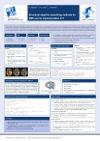
- 651-MT: Structural Adaptive Smoothing Methods for fMRI and its Implementation in R (K. Tabelow, H.U. Voss, J. Polzehl) >> PDF (0.7MB)
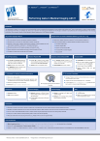
- 365-WTh: Performing Tasks in Medical Imaging with R (K. Tabelow, B. Whitcher, J. Polzehl) >> PDF (0.15MB)
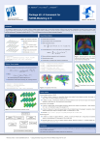
- 611-WTh: Package dti: A Framework for HARDI-Modeling in R (K. Tabelow, H.U. Voss, J. Polzehl) >> PDF (4.5MB)
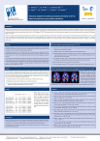
- 616-WTh: Structural Adaptive Smoothing Increases Sensitivity of DTI to Detect Microstructure Alterations (K. Tabelow, S. Keller, S. Mohammadi, H. Kugel, J.-S. Gerdes, J. Polzehl, M. Deppe) >> PDF (0.3MB)
The main focus of the project is on image analysis with intended applications to medical and biological images.
Problems considered within the project are complicated due to the following reasons.
- A high noise level and very low signal-to-noise ratio together with heteroskedastic tissue dependent variance and a very poor resolution is often a serious problem. The objects and signals of interest are very weak and can hardly be detected. Typical examples range from Diffusion Tensor Imaging (DTI), functional Magnetic Resonance Imaging (fMRI) to microbiological images produced by confocal microscopy. In the last decade, more and more images are recorded in 3D which makes a visual analysis almost impossible.
- The data is often given as non-stationary and aperiodic sequences (time series) of images which require a spatio-temporal analysis. The signal of interest is usually superposed by some irrelevant structure.
- Imaging procedures in medicine and technology are characterized by specific types of information. Images arising for example in Positron Emission Tomography (PET) rely on two Poisson type models. Microbiological images are often modeled by exponential type observations.
- Efficient image reconstruction and analysis requires to take properties like anisotropy and error correlation into account.
- The main goal of the analysis is typically identification of special objects and regions. Interest may be in revealing tissue borders or discontinuities in the image as in PET, in determing anisotropy for fiber detection with DTI, or in detection of activated regions when studying brain function by fMRI experiments. The goal is to study the structure of the images rather then just performing image denoising. This requires development and application of special procedures for edge detection, segmentation, classification, pattern recognition etc.
Medical and biological images cannot be sufficiently handled by standard imaging algorithms. The challenges mentioned above like low signal-to-noise ratio and spatio-temporal 3D data representation practically excludes the possibility of expert analysis and requires to develop new automatic methods and algorithms which enable automatic (pre)diagnostics, detection of damaged or activated regions, edge and pattern detection and recognition etc. Such methods should be able to reduce noise while preserving important structure like edges and homogeneous regions. A number of such structure adaptive methods have been developed in the research group of the Weierstrass Institute. The approach called Adaptive Weights Smoothing (AWS) uses spatially adaptive smoothing to remove the noise without loosing the structural information. An important feature lies in its direct applicability to 2D, 3D and even 4D data.
However, high dimensionality of the data makes it necessary to additionally apply some dimension reduction technique. The basic idea is to project the high dimensional data into a low dimensional subspace without loosing important characteristics of the data. Some new structure adaptive dimension reduction methods were developed in our group and applied, e.g., to analyze fMRI data.
last reviewed: Jan 26, 2012, K. Tabelow